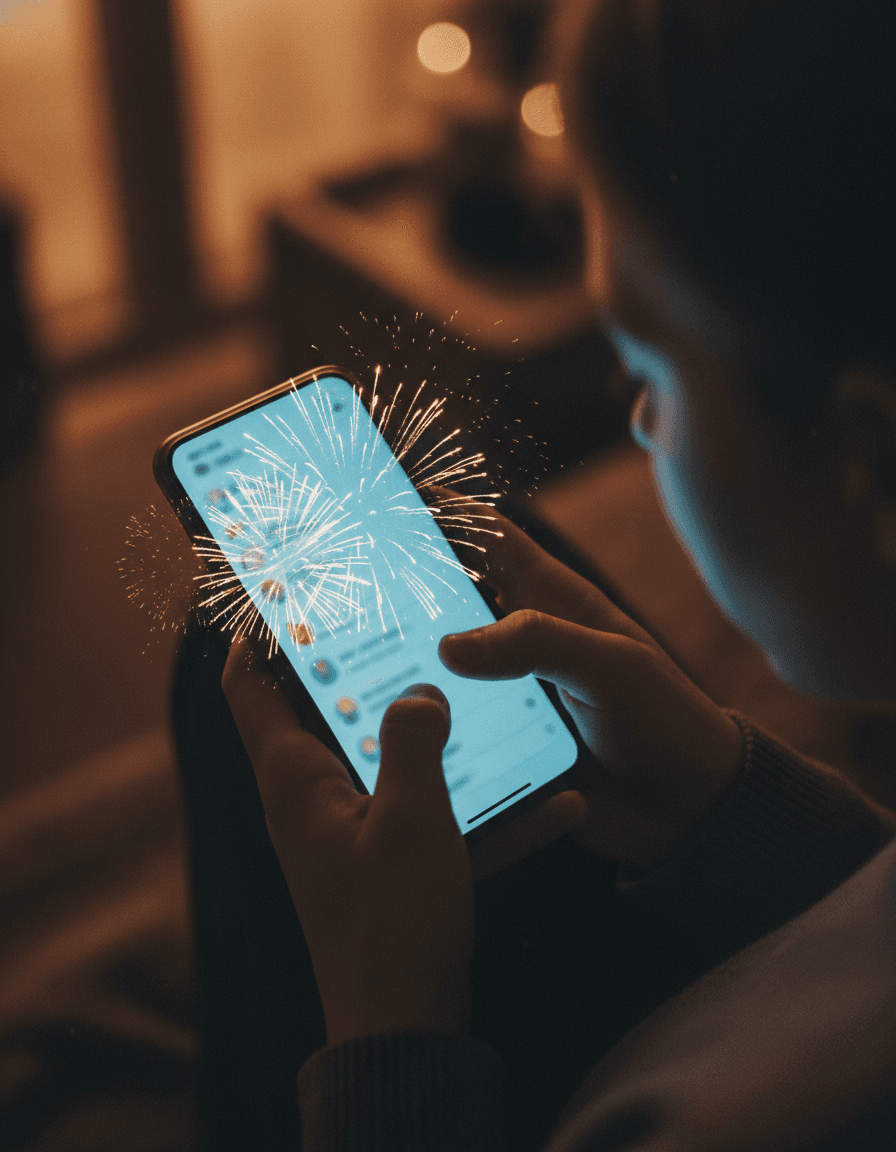
The Quiet Hours
It's 3 AM. The house is silent. Sleep won't come.
Your mind races through worries, memories, half-formed thoughts that seem magnified in the darkness. You want to talk to someone—anyone—but everyone you know is asleep.
This moment, experienced by millions every night, reveals something profound about loneliness: it's not about being physically alone. It's about having no one to turn to when you need connection most.
Why Nighttime Loneliness Feels Worse
Research in circadian psychology shows that our emotional regulation weakens during nighttime hours. The prefrontal cortex—responsible for rational thinking—becomes less active, while the amygdala—our emotional center—remains vigilant.
This means:
- Worries feel bigger at 3 AM than at 3 PM
- Emotional pain intensifies when we should be sleeping
- The urge to connect becomes almost physical
- Isolation feels absolute in the silence
Dr. Matthew Walker, sleep researcher at UC Berkeley, notes that sleep-deprived or sleep-disrupted individuals show a 60% increase in emotional reactivity. The night doesn't just feel lonelier—it neurologically is lonelier.
The Reluctant Solitude
There's a particular kind of loneliness in not wanting to burden others:
- You don't want to wake your partner
- You can't call friends at this hour
- Family would worry if you reached out at 3 AM
- Crisis lines feel "too serious" for what you're feeling
So you sit with it. Alone with thoughts that spiral.
This reluctant solitude affects:
- New parents awake with babies, craving adult conversation
- Shift workers whose schedules don't align with loved ones
- Caregivers who find their only quiet time at night
- Anxiety sufferers whose minds activate when the world quiets
- The bereaved facing another night without their person
What We Actually Need at 3 AM
Research from the University of Chicago's Social Neuroscience Laboratory found that what lonely people need most isn't advice or solutions—it's presence and acknowledgment.
At 3 AM, we don't need someone to fix our problems. We need:
- Someone to say "I hear you"
- A space to express without judgment
- Acknowledgment that our feelings are valid
- Simple companionship in the darkness
- The feeling that we're not alone in this moment
The Bridge Across the Night
What if those 3 AM moments didn't have to be faced alone?
Imagine having someone who:
- Is genuinely available at any hour
- Listens without judgment or impatience
- Remembers your context and concerns
- Helps you process thoughts until calm returns
- Never makes you feel like a burden
This isn't about replacing human relationships. It's about filling the gaps that modern life creates—those 3 AM moments when everyone else is unavailable, and you need connection to make it through to morning.
A Different Kind of Support
We're building something for those quiet hours. Not a replacement for human connection, but a bridge across the lonely moments—an AI companion that understands the weight of 3 AM thoughts.
Because no one should have to face the night alone.
If you're struggling with persistent insomnia or nighttime anxiety, please consult a healthcare professional. You deserve support—both human and technological.
Coming soon: heyeu.ai